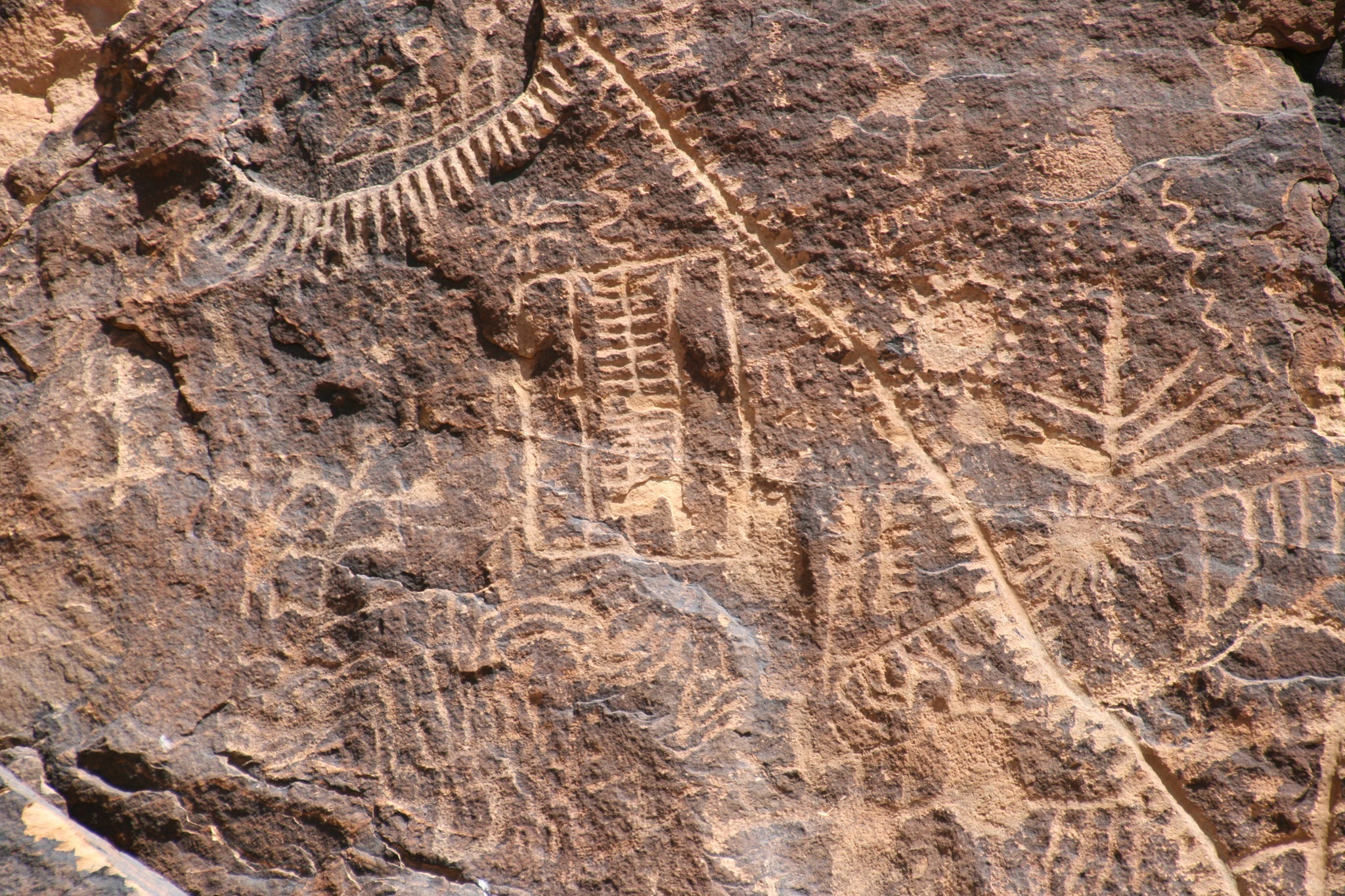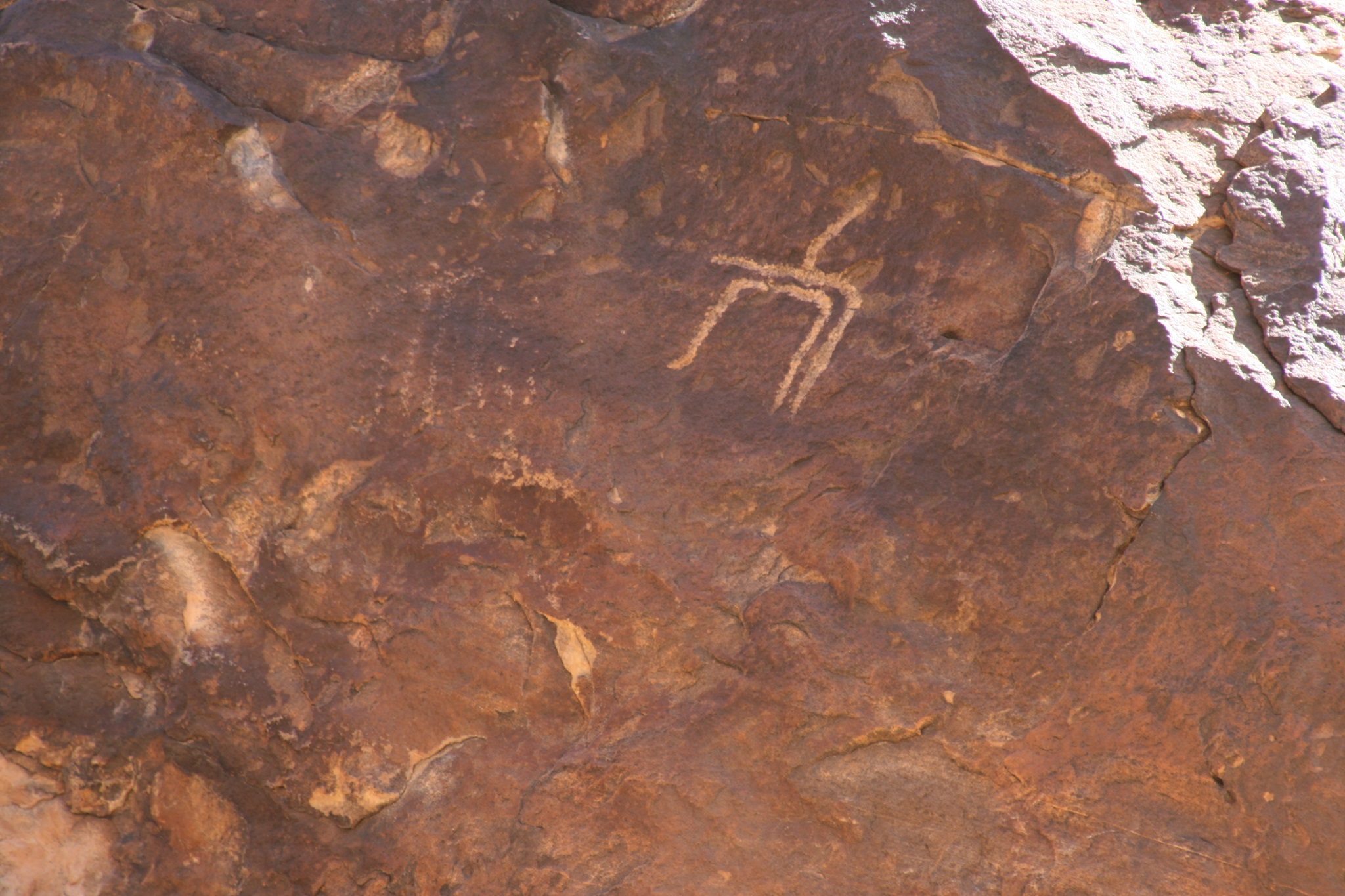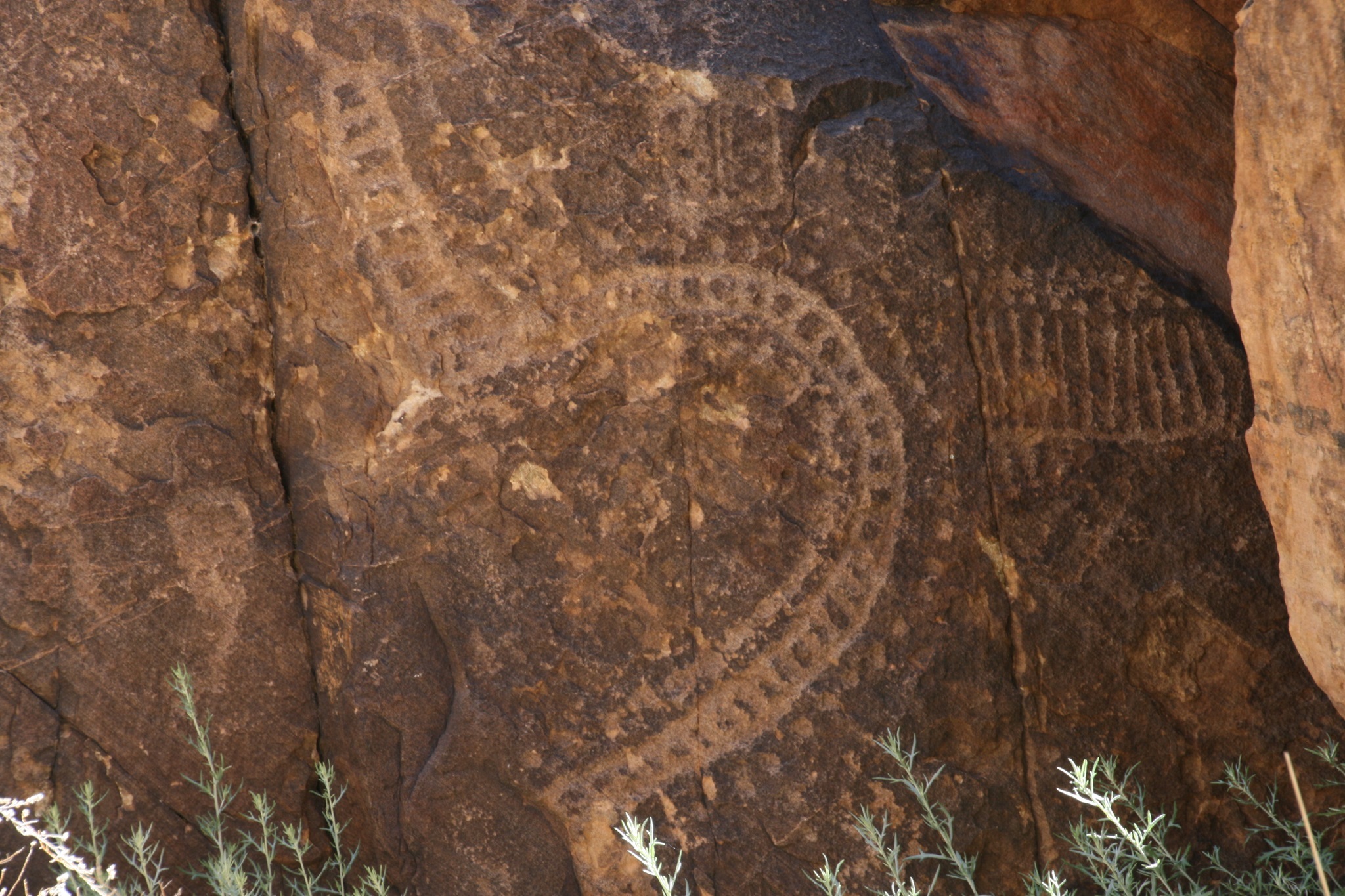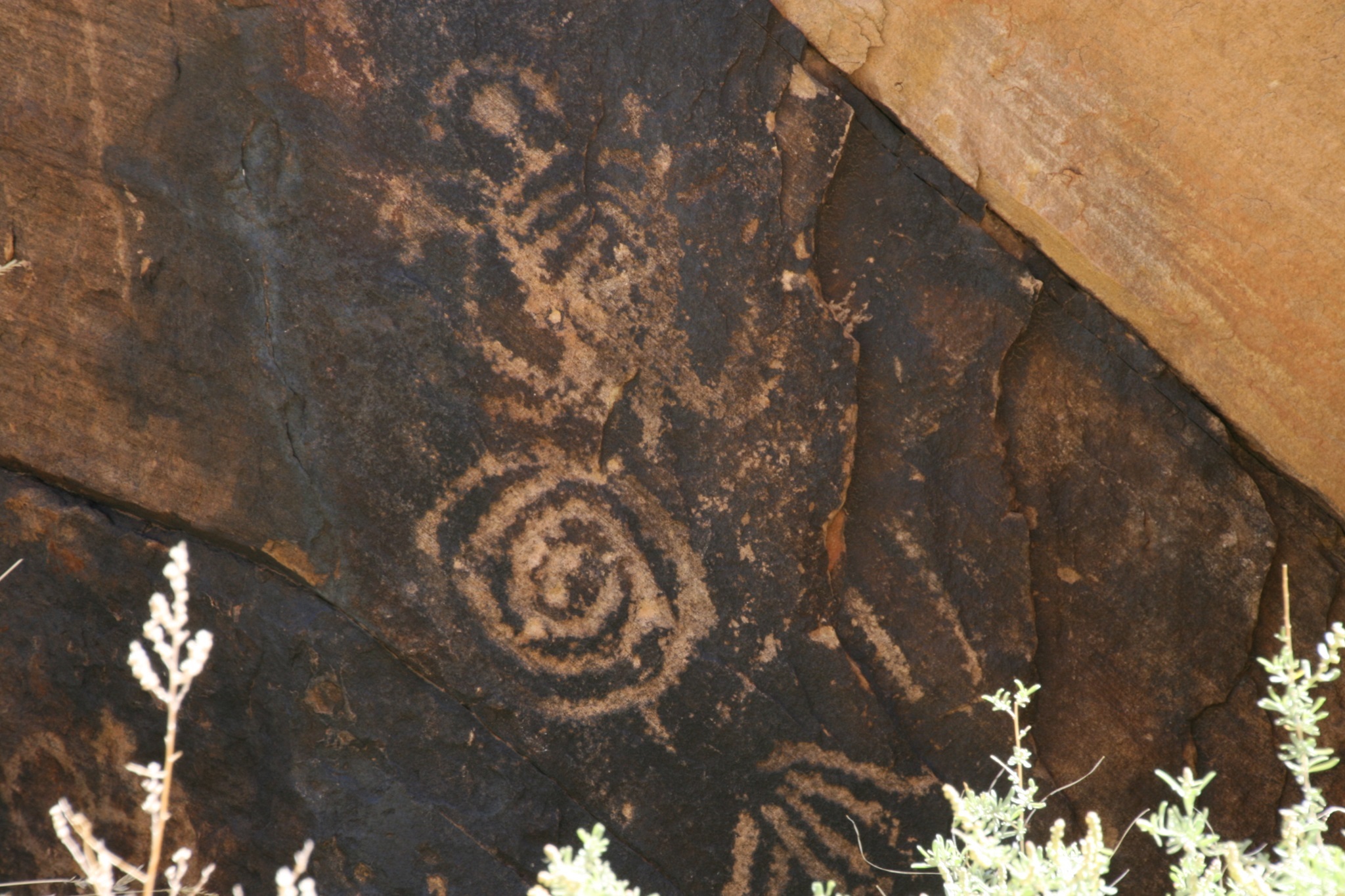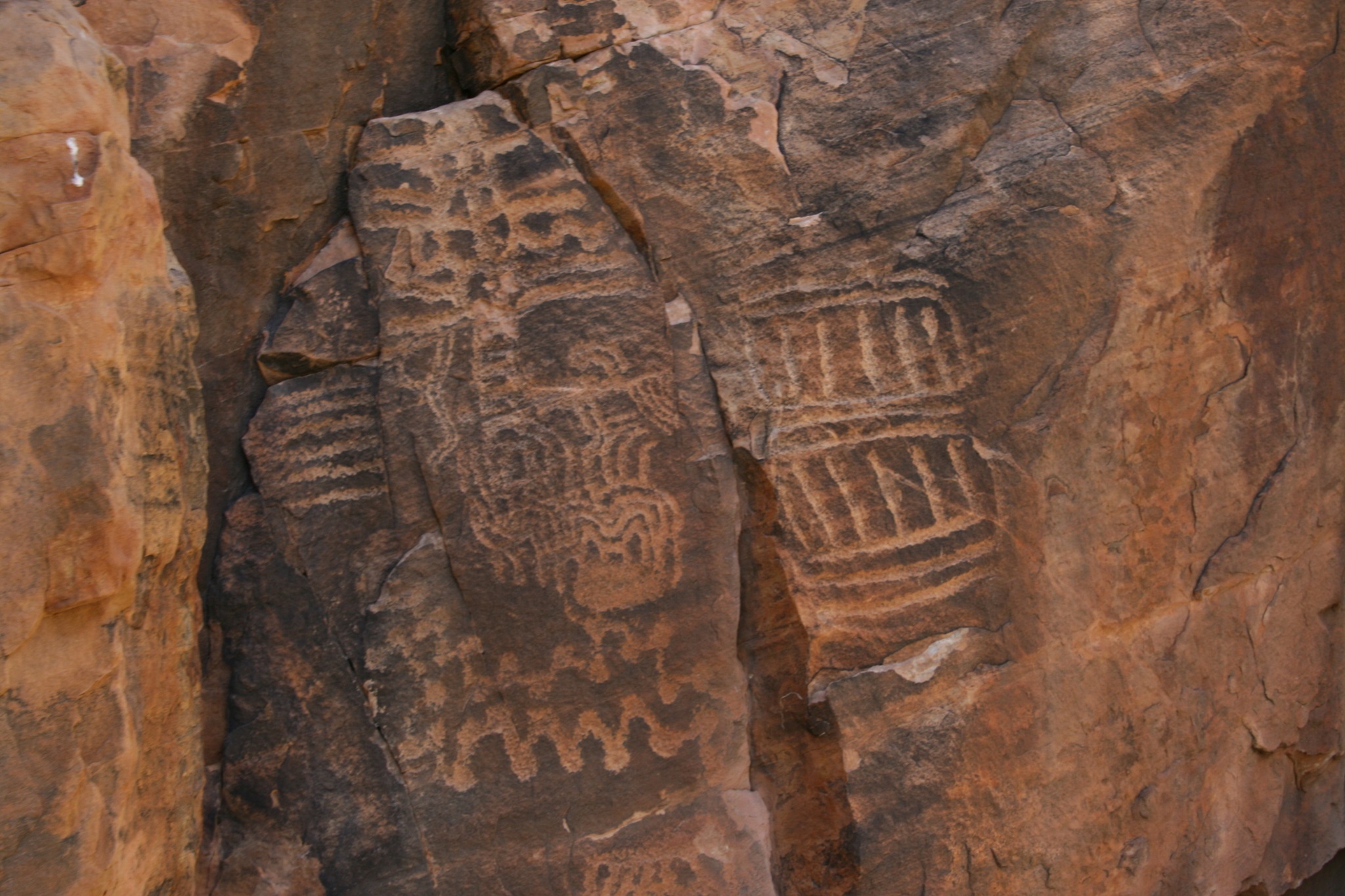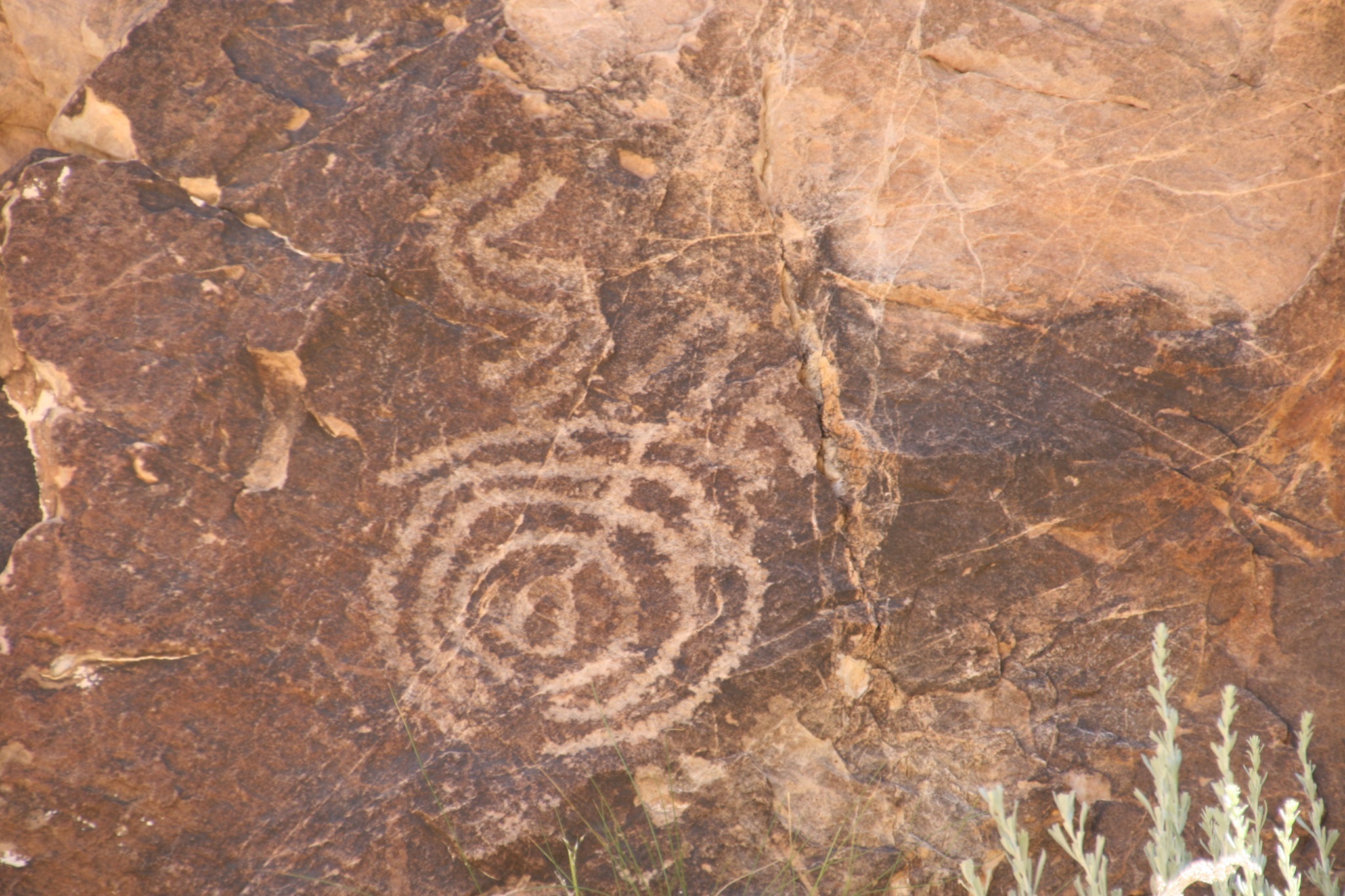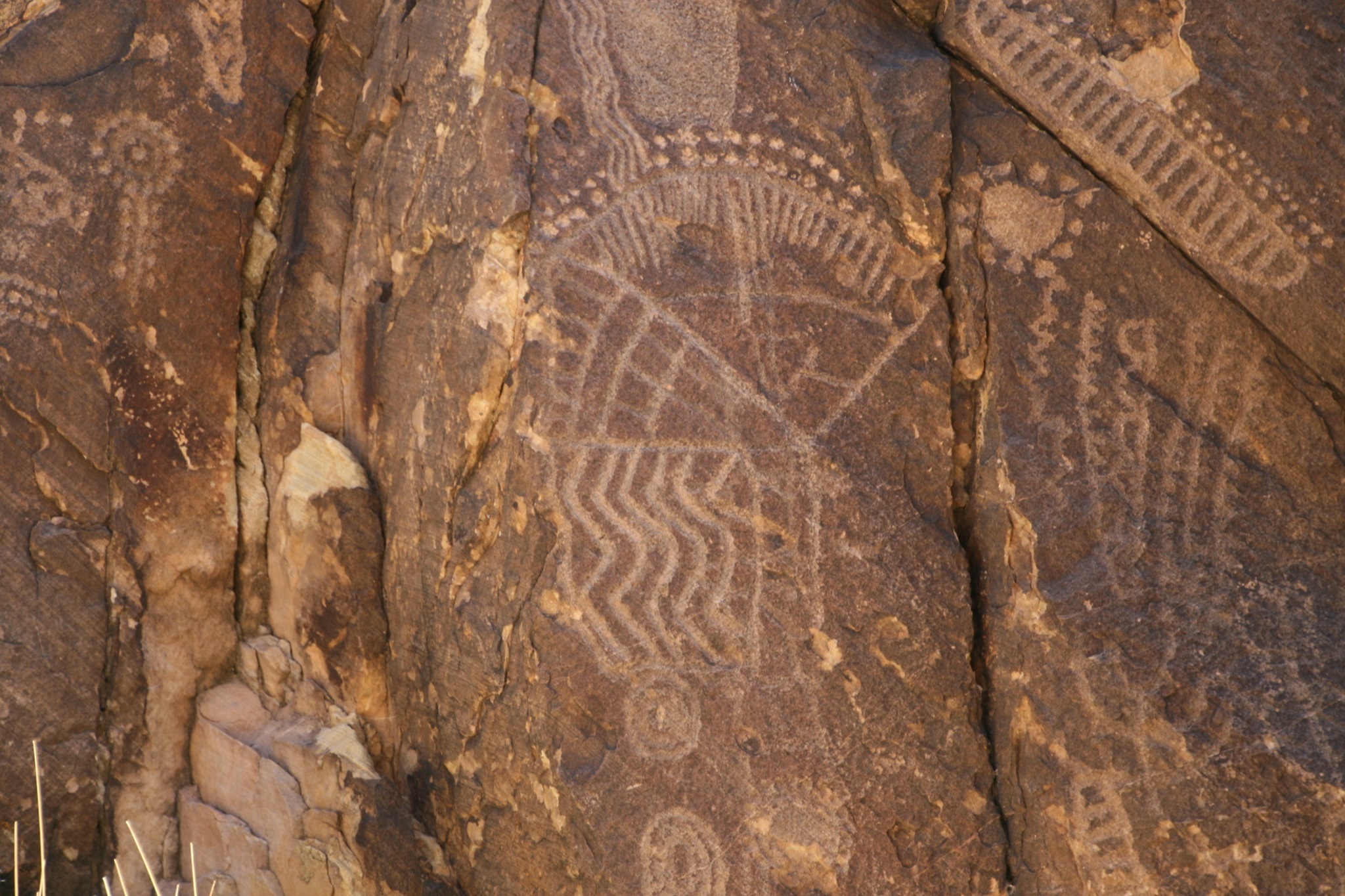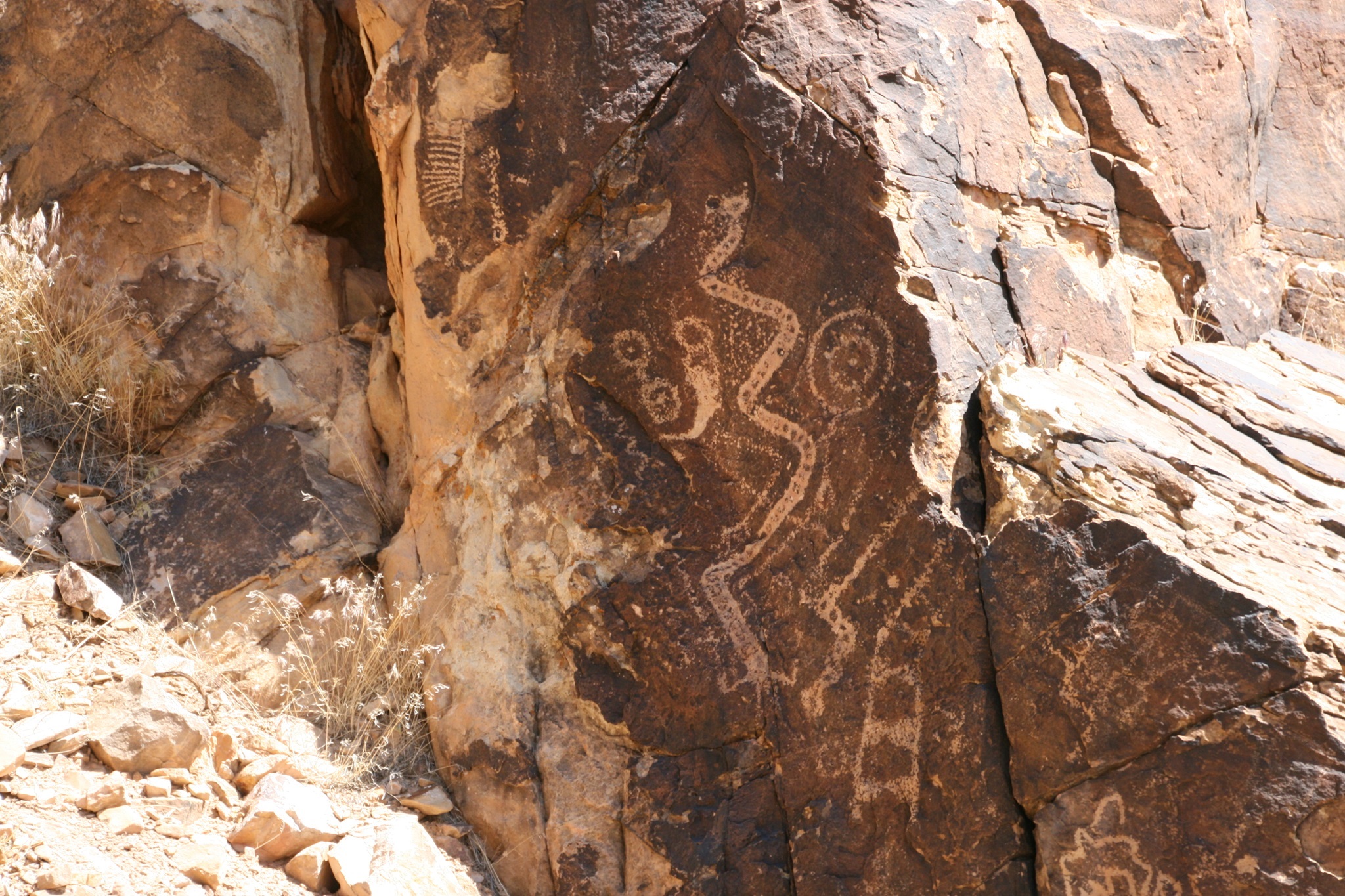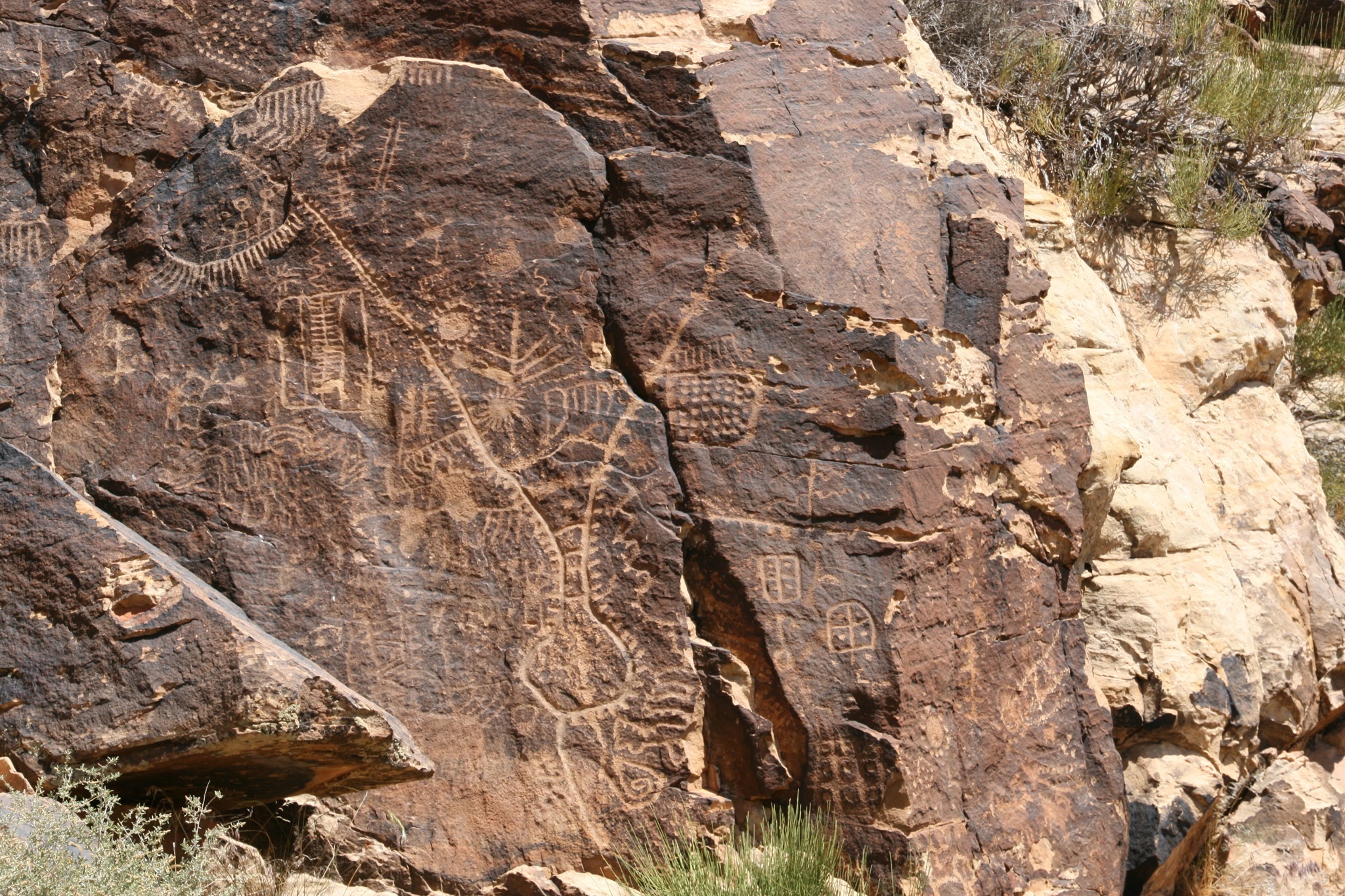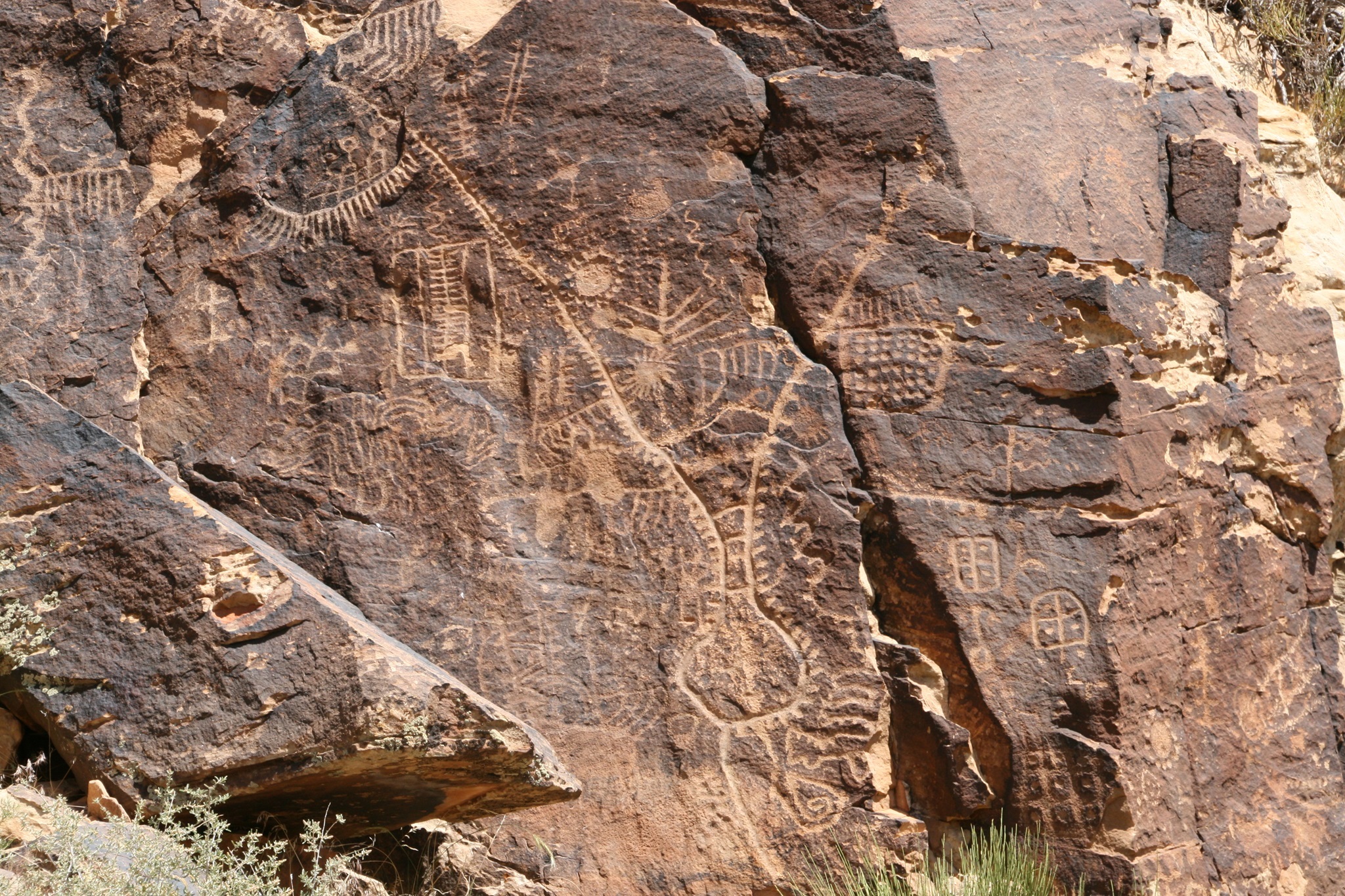
The Parowan Gap Petroglyphs near Cedar City Utah.
Fremont culture petroglyphs in Parowan Gap
The petroglyphs here are thought to be the work of several cultural groups and represent a long period of use by Native cultures. What these designs mean is still unknown. Archaeologists debate that they represent concepts, ideas or actual happenings. Perhaps they were part of a religious activity or hunting ritual.
Water from an ancient stream cut a narrow path through the sandstone. Eventually the stream vanished and the wind picked up where the water left off. This passage eventually became a path that was frequently traveled by the ancient Fremont Cultures and the ancestors of the Southern Paiute and Hopi People. During their journeys some stopped and spent time pecking and chiseling images into the rock.
The Parowan Gap is a 500-foot deep pass through the Red Hills.
The walls of the Parowan Gap are steep jumbles of weathered and fractured Navajo sandstone. There are an impressive number of panels covered in petroglyphs. Some are recognizable as animals and humans, but mostly they are shapes. Circles, spirals, lines, and dots all collide and overlap giving you the sense that some of the petroglyphs are newer than others.
Some people believe that the Gap was considered a special place at certain times of the year.
One of the more impressive panels is the Zipper petroglyph located on the Gap’s northeast side. Recent studies have put forth the idea that it is a map, a calendar of solar alignments, and a system of outer cairns. The Zipper is thought to be an inverted man with an arrow in his skull.